
- News
- City News
- lucknow News
- 'Poor quality of 'dal' shook British empire, led to the last war before Independence'
Trending
This story is from December 6, 2022
'Poor quality of 'dal' shook British empire, led to the last war before Independence'
Discontent over poor quality of 'dal' (pulses) served in the mess to Indian non-commissioned officers and sailors of Royal Indian Navy (RIN) led to a revolt, which not only shook the British empire but ultimately became the last war before Independence in February of 1946.
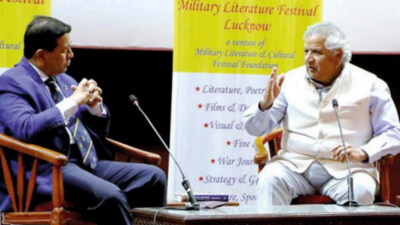
"Back in those days, the majority of Indian sailors primarily hailed from villages and were farmers' son. Most of them had joined navy with a hope for better life, but in reality, all they faced was discrimination by the Britishers," said Pramod Kapoor
Based at Bombay (Mumbai), HMIS Talwar was the signal-training establishment of the RIN.

"Back in those days, the majority of Indian sailors primarily hailed from villages and were farmers' son. Most of them had joined navy with a hope for better life, but in reality, all they faced was discrimination by the Britishers," said Pramod Kapoor, who has written a book on the topic. He was speaking at the conclusion of Military Literature Festival at Surya auditorium on Monday.
"The last straw which triggered the mutiny was the poor-quality food being served to ratings. On February 17 night, ratings refused to eat dinner, as the meal served to them was watery and full of small-sized stones. When they reiterated their demand for decent food, the British officer said that beggars can't be choosers.
The next morning, some 1,500 ratings walked out of the mess hall in protest against the poor-quality dal," he said. However, soon after, it was declared that this will not remain a mere food protest but a formal list of demands, including a call to release all Indian political prisoners, including INA POWs, will be submitted.
"By February 21st, the British Admiral John Henry Godfrey sent the army to surround the barracks of ratings and ordered
Maratha soldiers to fire at the barracks, but they refused.
Later, the British troops attacked ratings. By the end of February 23, 1946, more than 400 people, including Indian sailors, British troops and others were killed and ultimately, the ratings surrendered. There was no support from Congress to ratings," he claimed
End of Article
FOLLOW US ON SOCIAL MEDIA







Photostories

Hot Picks
TOP TRENDING
Popular Categories
Hot on the Web
Top Trends
Hurricane MiltonRatan Tata NewsNew UPI Transaction LimitRatan Tata DiesPM ModiRafael NadalShantanu NaiduTom BradyStock Market TodayNarayana MurthyEngland Cricket Team New RecordRatan Tata Inspiring QuotesManagement Colleges of IndiaTop Medical Colleges of IndiaTop Engineering Colleges of IndiaTop Pharmacy Colleges of IndiaLive Cricket Score
Trending Topics
Diwali WishesBigg Boss Tamil 8 Contestants ListBhool Bhulaiyaa 3 TrailerVettaiyan Twitter ReviewSanjay Leela BhansaliVettaiyan ReviewSalman KhanDevara CollectionBigg Boss 18Deepika PadukoneShraddha KapoorRatan Tata Passed AwayColdplayVettaiyan Movie ReviewSwatantrya Veer SavarkarDussehra 2024Watch NFL Live StreamDress To ImpressRatan Tata DeathWordle Answer
Living and entertainment
Latest News
How Chennai Night Race swerved past challenges to zoom toward a brighter motorsports futureAll-Star Tower Defense (ASTD) Codes October 2024Ranveer Singh: I have a man crush on Tiger ShroffWho is Noel Tata? Meet Ratan Tata’s half-brother, who could be successor at Tata TrustsHow to make Ginger Turmeric Shots for seasonal changeWhen Amitabh Bachchan slept on Marine Drive with rats as neighbours: I didn’t have a place to stayEthel Kennedy, widow of Senator Robert F Kennedy Sr suffers stroke in sleep, hospitalised'Stree 2' hits OTT after record-breaking box office success: Here’s where to watch!Da Hood Codes October 2024: Unlock new weapons to elevate your gameplay'Thalapathy 69': Here's how much Vijay will be earning in his last film!How The Tarot Suit Can Be Associated With The Elements'You're drunk': Britons stunned by BBC app's shocking 18,995 mph wind forecast!Hanging Lights For Living Room: Transform and Illuminate Your SpaceICC Women's T20 World Cup: Harmanpreet Kaur, Smriti Mandhana, bowlers demolish Sri Lanka as India get NRR boostArko: The reach of Bollywood is greater than single albumsExclusive- Iss Ishq Ka Rab Rakha fame Shalini Kapoor Sagar on celebrating Navratri festivities says, "We will be shooting the Durga Puja track soon"Leaders of 24 countries, UN chief to attend BRICS summit: KremlinOnly a true creative genius can spot the odd unicorn in 12 seconds!
Copyright © 2024 Bennett, Coleman & Co. Ltd. All rights reserved. For reprint rights: Times Syndication Service